Guatemala · Central America · August 2025
The trip started with a flight out of Newark (EWR) into La Aurora International Airport (GUA) in Guatemala City. From there, it's about a 45-minute drive to Antigua — I grabbed an Uber straight from the airport rather than dealing with a shuttle counter, and it was simple and cheap.
Uber and inDrive both work reliably from GUA airport arrivals — pickup is usually a short walk to the designated rideshare zone.
The drive to Antigua winds through hills and coffee farms — a good first look at the countryside before the city's cobblestones.
Antigua is what happens when a 16th-century Spanish colonial capital gets frozen in time by earthquakes and then lovingly restored — cobblestone streets, pastel-colored facades, and baroque church ruins, all ringed by three volcanoes standing close enough to feel like part of the skyline.
Founded in 1543 as the capital of the Captaincy General of Guatemala, the city was largely destroyed by earthquakes in the 1700s and the capital moved elsewhere — which is exactly why Antigua stayed small and preserved instead of building over its history. Walk a few blocks in any direction and you'll pass the iconic Arco de Santa Catalina, crumbling convent ruins draped in bougainvillea, and a central plaza that still runs on old-world rhythm — slow mornings, long lunches, church bells on the hour.
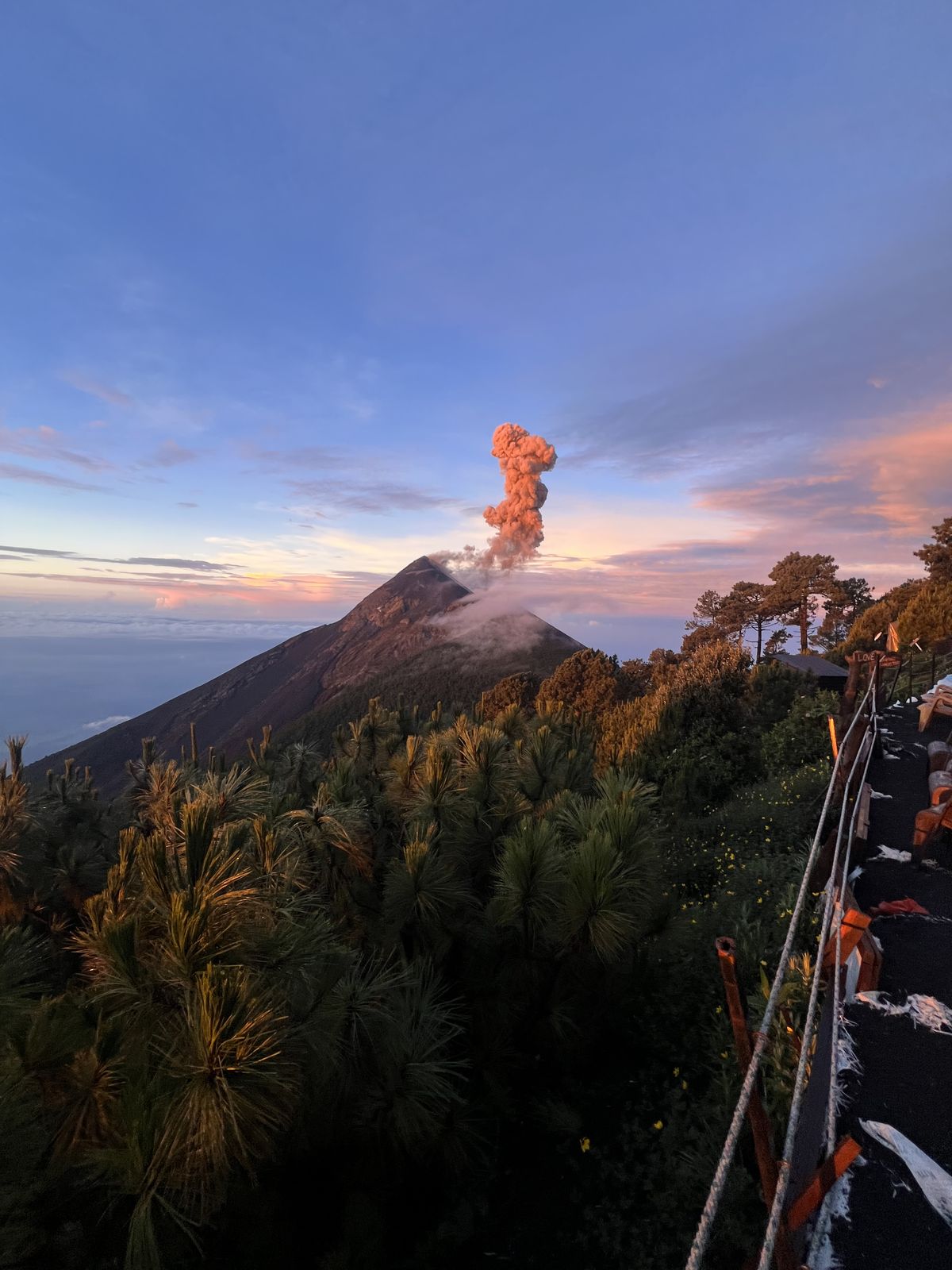
What makes it unforgettable is the backdrop: Volcán de Agua looms directly over the city to the south, while Fuego — an active volcano — puffs smoke visible from half the rooftops in town. It's rare to be in a place this historic and this alive at the same time.
Meson Panza Verde is the standout — a boutique hotel with warm terracotta interiors, an art gallery, and arguably the best restaurant in the city on-site. For something with a spa and more scale, Hotel Museo Spa Casa Santo Domingo is built into a former monastery with its own museums on the grounds — genuinely unique. Both are walkable to the central plaza.
For a proper sit-down dinner, the restaurant at Meson Panza Verde is excellent. For traditional Guatemalan food, La Casa de las Sopas does a rich Pepián de Pollo — the national dish — that's worth building a meal around. Caoba Farms is a farm-to-table lunch spot on the edge of town, worth the short walk. And for volcano views with your coffee, grab a table at a rooftop facing Fuego — you'll usually catch it venting smoke in the distance.
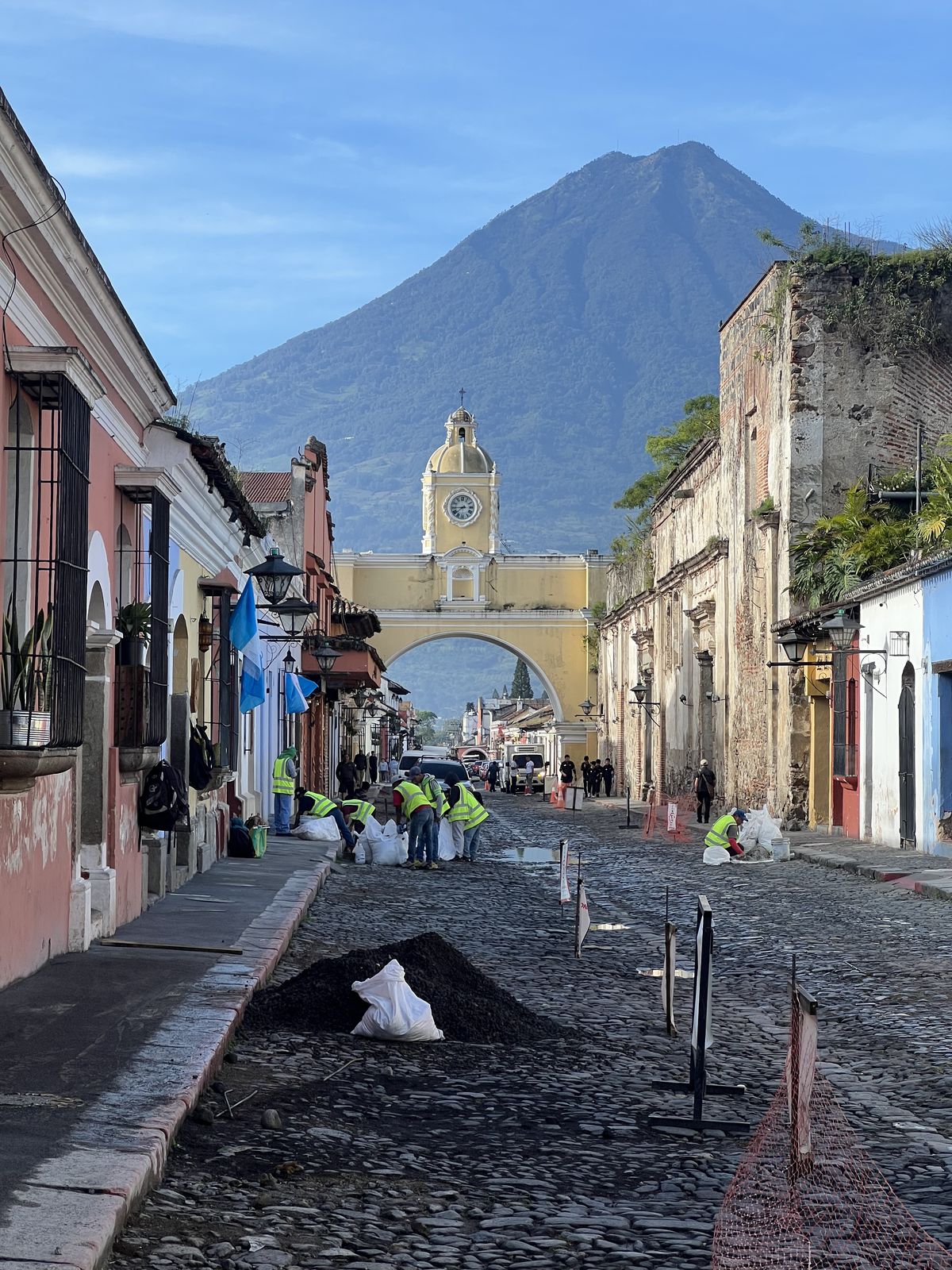
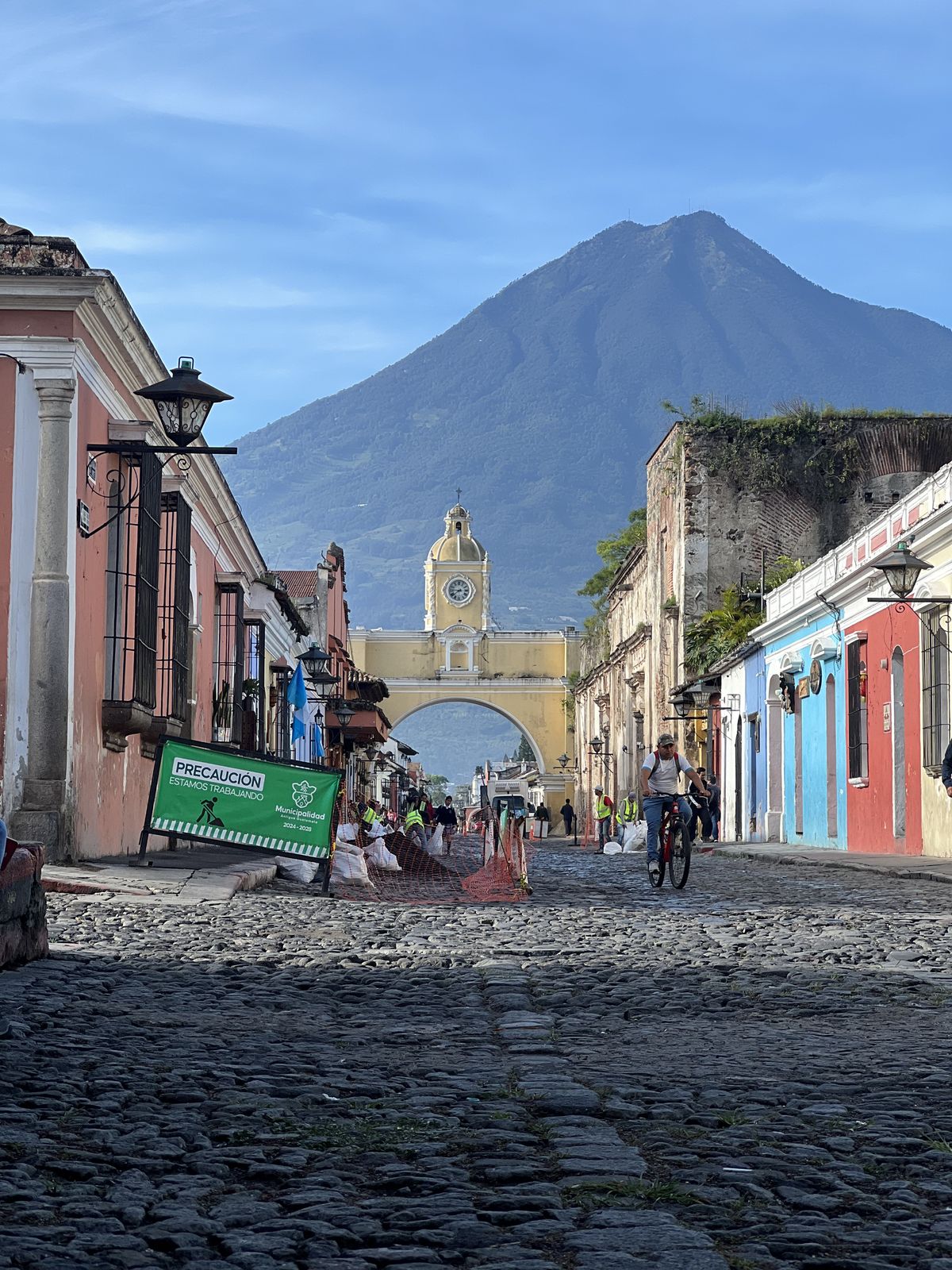
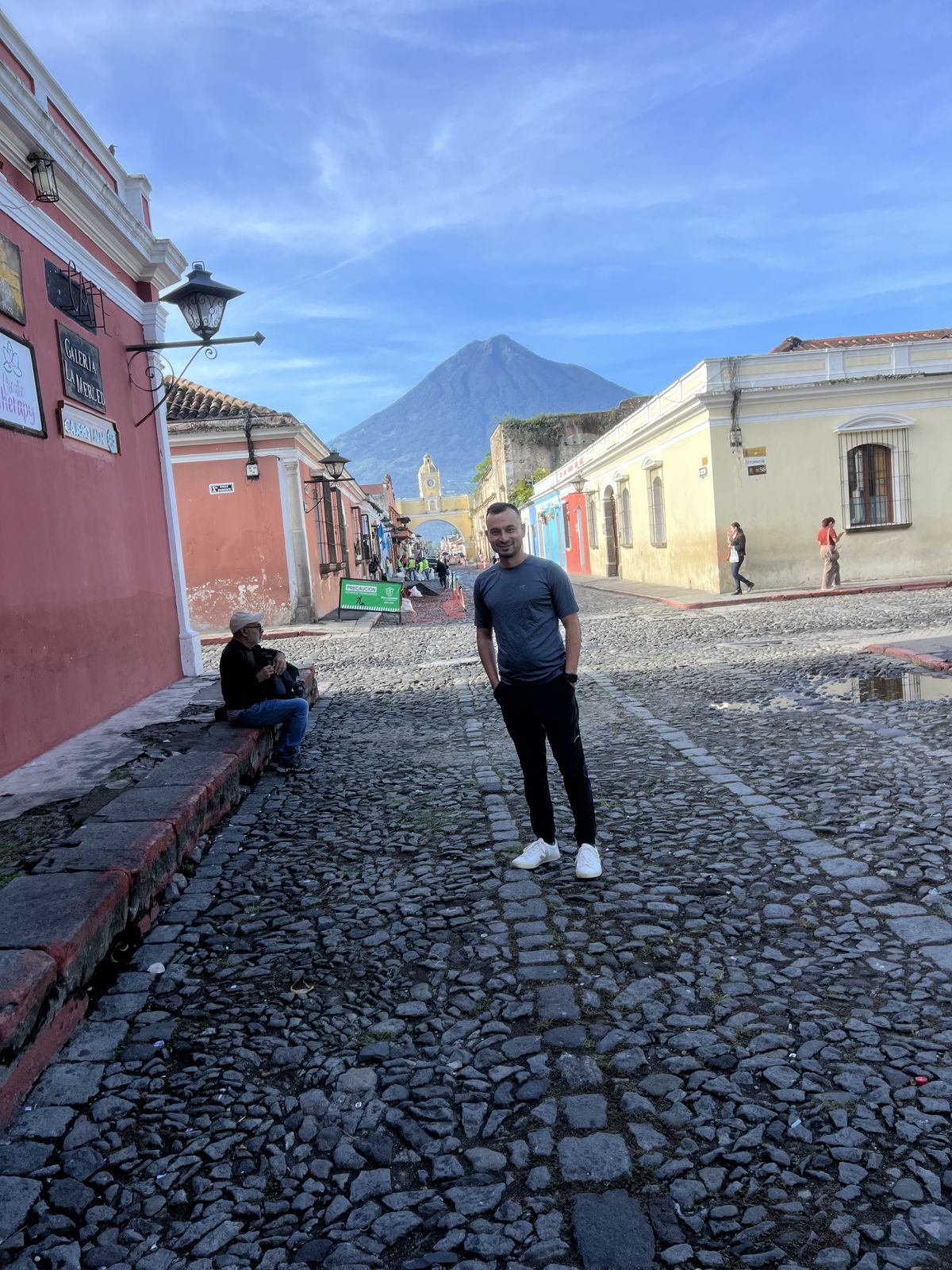
Antigua's colonial streets, Day One
I booked this through v-hiking.tours — they pick you up from various points around Antigua, which makes logistics painless. Here's the itinerary they run:
Q100 per person (park entrance fee) — cash only.
Warm clothes and hiking shoes — it gets genuinely cold at base camp after dark.
3 liters of water plus your favorite snacks.
Your adventurous spirit.
Acatenango is brutal in the best way — a steady, grinding climb through farmland, cloud forest, and volcanic ash slopes that tests your legs long before you reach camp. And it's worth every step.
The trail starts at 2,400m and doesn't let up. The first stretch cuts through cornfields and pine forest, and as you climb, the air thins and the vegetation changes completely — by the time you break above the treeline, you're walking through loose volcanic scree with the wind picking up and Fuego visible dead ahead, actively smoking. Reaching base camp at 3,600m feels like arriving on a different planet: a ridge of tent platforms staring directly across a valley at an active volcano.
The optional side hike to Fuego's ridge in the late afternoon is the single best decision you can make on this trip. It's a steep, loose-scree scramble that takes roughly an hour each way, but it puts you close enough to feel the ground rumble when Fuego erupts — and it erupts often, sometimes every 15–20 minutes, throwing ash and glowing rock into the air. Watching that from a ridge with no barrier between you and the volcano, as the light fades and the eruptions turn from smoke plumes to visible fire against the dark sky, is genuinely one of the most extraordinary things I've done. Dinner and the "volcano show" back at camp — watching Fuego erupt against a black sky from a camp chair with a hot meal in hand — is the payoff for the whole first day.
Day two starts brutally early — a 3 or 4am wake-up for the final summit push to Acatenango's peak at 3,976m, timed to reach the top for sunrise. It's cold, dark, and steep, but the summit view is the reward: a 360° panorama above the clouds, with Fuego still venting below you, Agua and Pacaya visible in the distance, and the sun coming up over the whole range. Breakfast afterward at Miratenango — a small restaurant back down near base camp — was a welcome, well-earned meal before the descent back to Antigua.
Do the Fuego side hike. It adds a tough extra hour to an already long day, but it's the difference between watching a volcano from a distance and standing close enough to feel it. Layer up more than you think you need — base camp temperatures drop hard after sunset, and the summit push before dawn is genuinely cold.
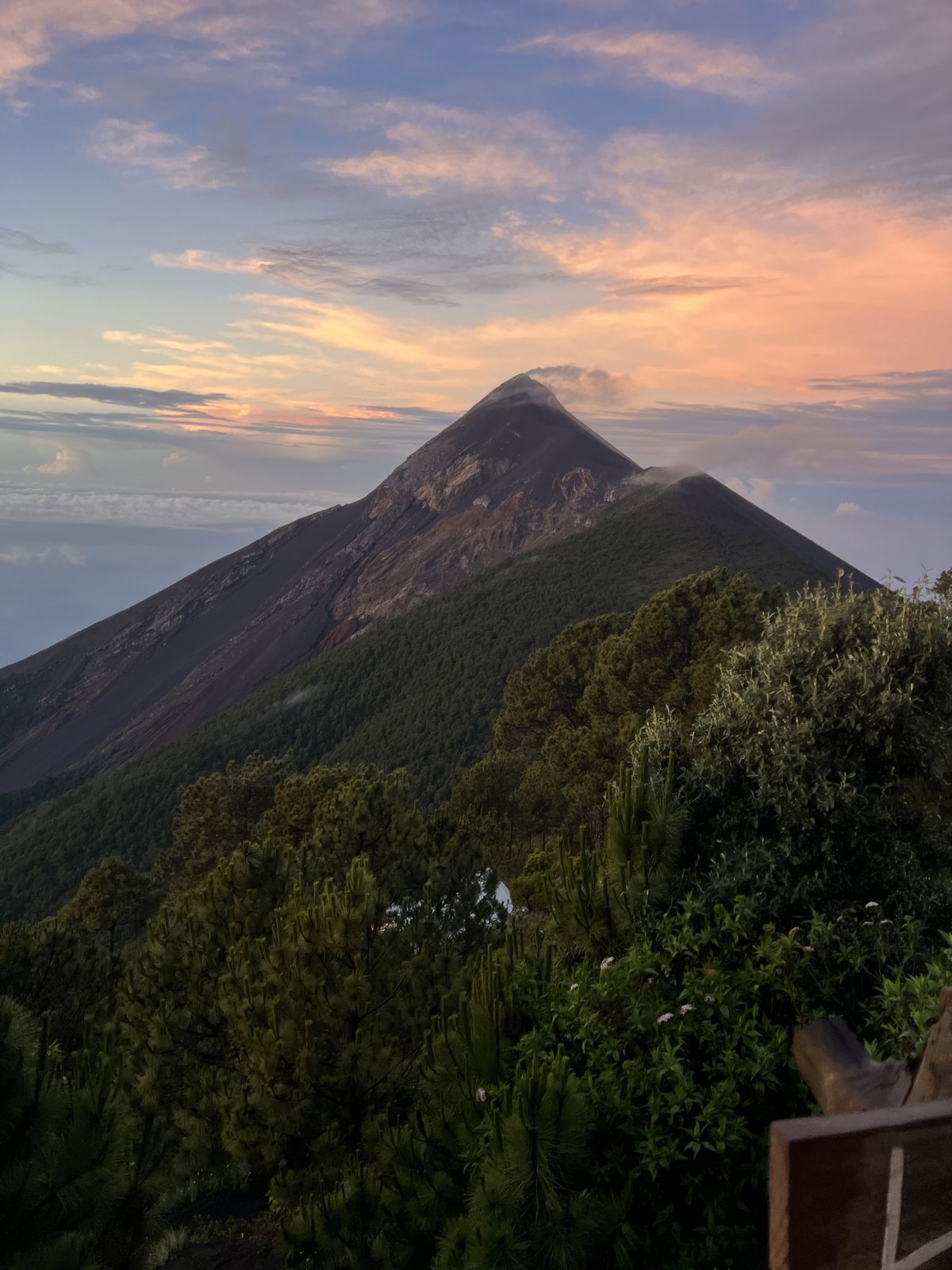
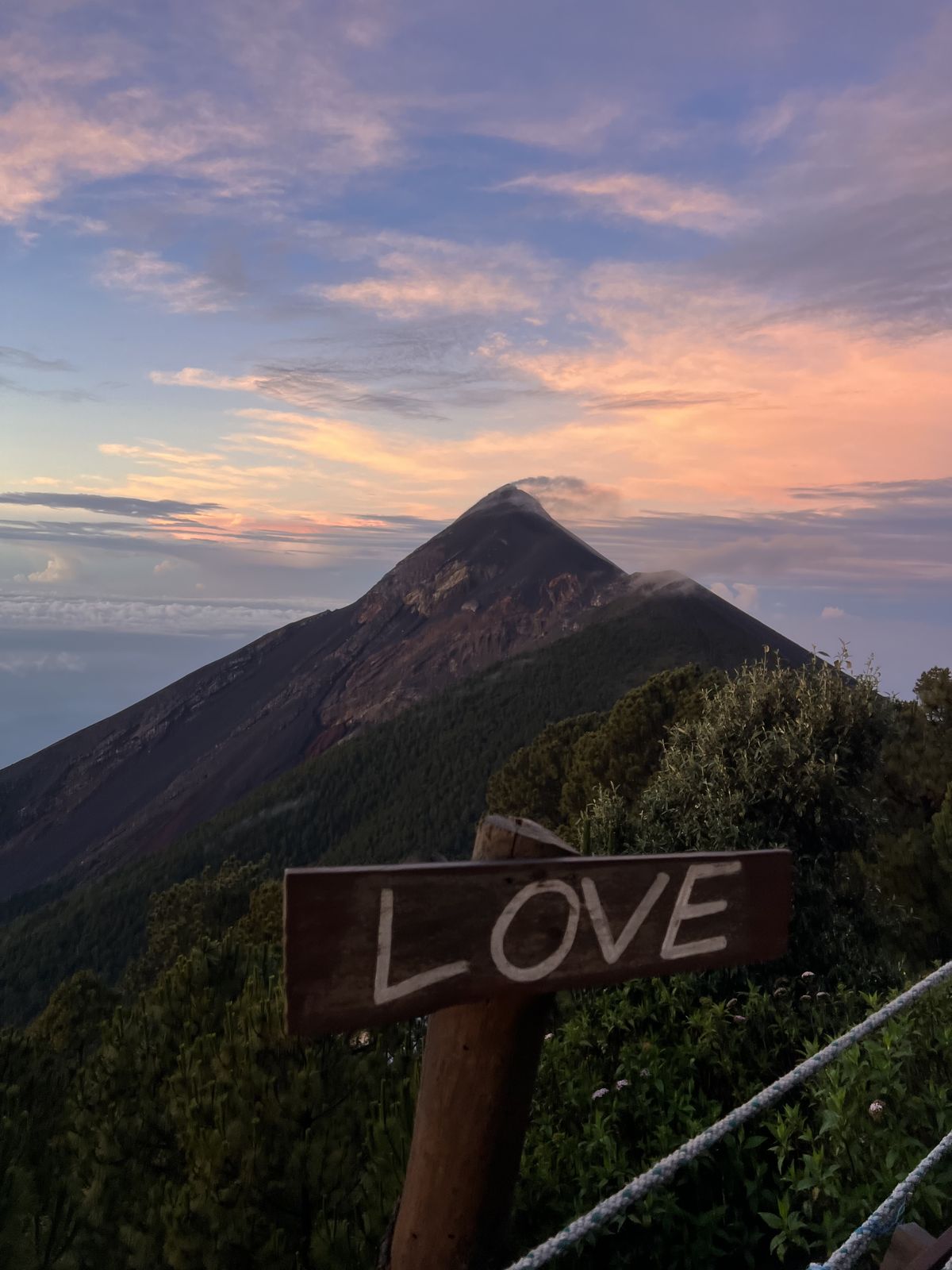
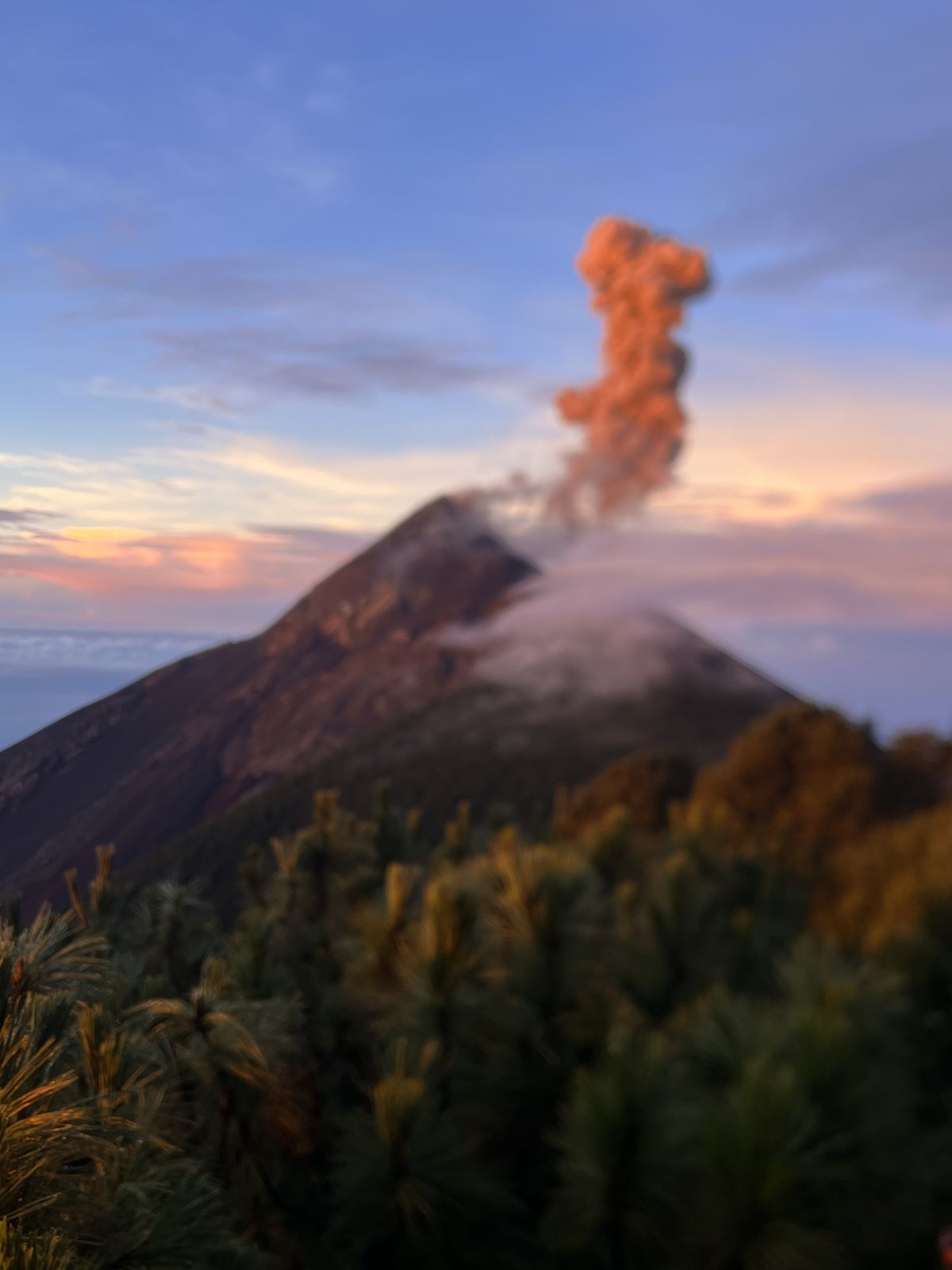
Base camp and the Fuego side hike, Days Two & Three
Watching Fuego erupt from a ridge with no barrier between you and the volcano, ash and fire lighting up the dark — that's not something you forget.
— Raju, Acatenango, GuatemalaAfter the descent from Acatenango, I headed straight to Lake Atitlán — a volcanic crater lake ringed by three more volcanoes and a string of small towns, each with its own personality. Most shuttles from Antigua drop you in Panajachel, the lake's main hub and transit point, where the public boat docks are.
From Panajachel, I took a public lancha (motorboat) directly to San Marcos La Laguna and settled into a hotel there for a couple of nights — a quieter, more laid-back town than Panajachel, known for yoga studios, lakeside swimming docks, and a slower pace after the volcano.
Shuttles run regularly between Antigua and Panajachel — roughly 2.5–3 hours, bookable through most hostels or hotel front desks in Antigua.
From Panajachel's public dock, lanchas depart frequently during daylight hours, generally stopping less often after dark — plan to arrive at your destination town before sunset.
Fares are cheap and paid on the boat — a few quetzales per hop depending on distance.
Lake Atitlán doesn't have roads connecting most of its towns — the lancha network is how everyone gets around, and it's genuinely one of the best parts of visiting. Panajachel functions as the central hub; from there, boats fan out to every town ringing the lake.
San Marcos La Laguna — quiet, wellness-focused, great swimming docks and jungle paths.
San Pedro La Laguna — the liveliest of the group, with a backpacker scene, bars, and Spanish schools.
San Juan La Laguna — right next to San Pedro, known for weaving cooperatives and a more traditional, artisan feel.
Santa Cruz La Laguna and Jaibalito — smaller, quieter, reachable only by boat or on foot along the lakeside trail.
Santiago Atitlán — the largest indigenous Tz'utujil town on the lake, with its own market and market days worth timing a visit around.
Boats between the closer towns (San Marcos, San Juan, San Pedro) run constantly during the day and you rarely wait more than 10–15 minutes at a dock. Getting to the far side of the lake or back to Panajachel after dark is trickier — boats thin out fast once the sun goes down, so plan your last hop of the day earlier than you think you need to.
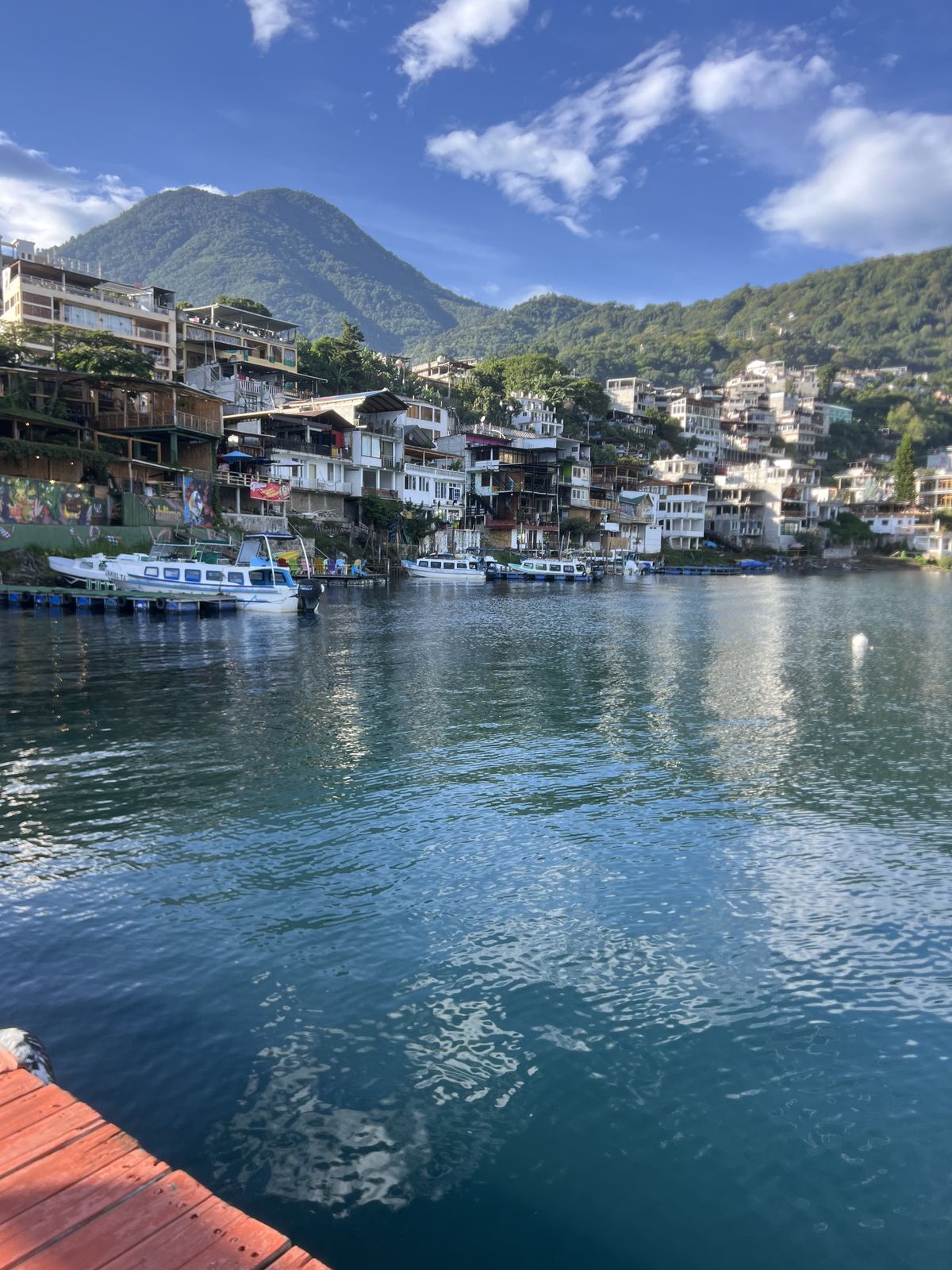
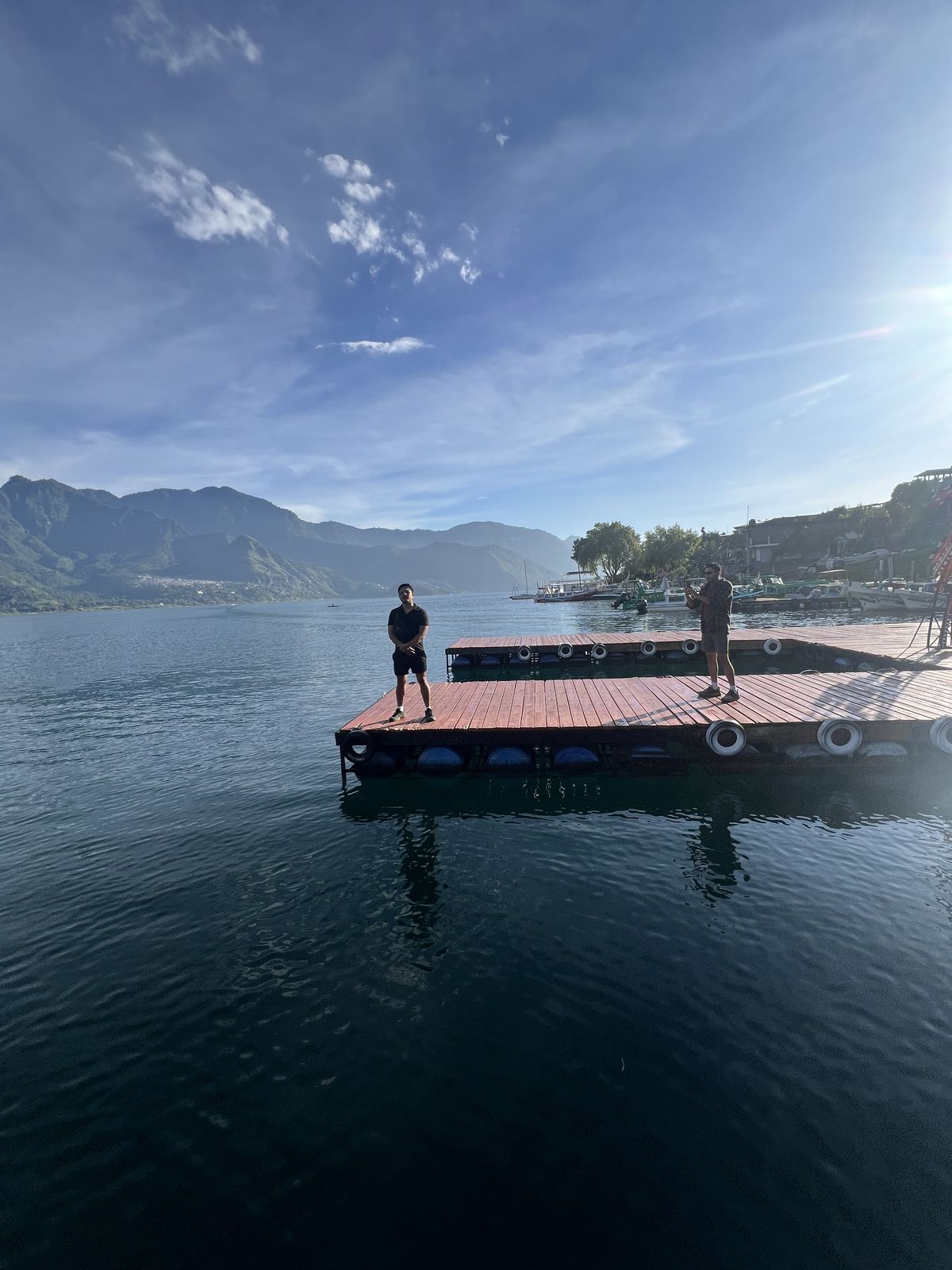
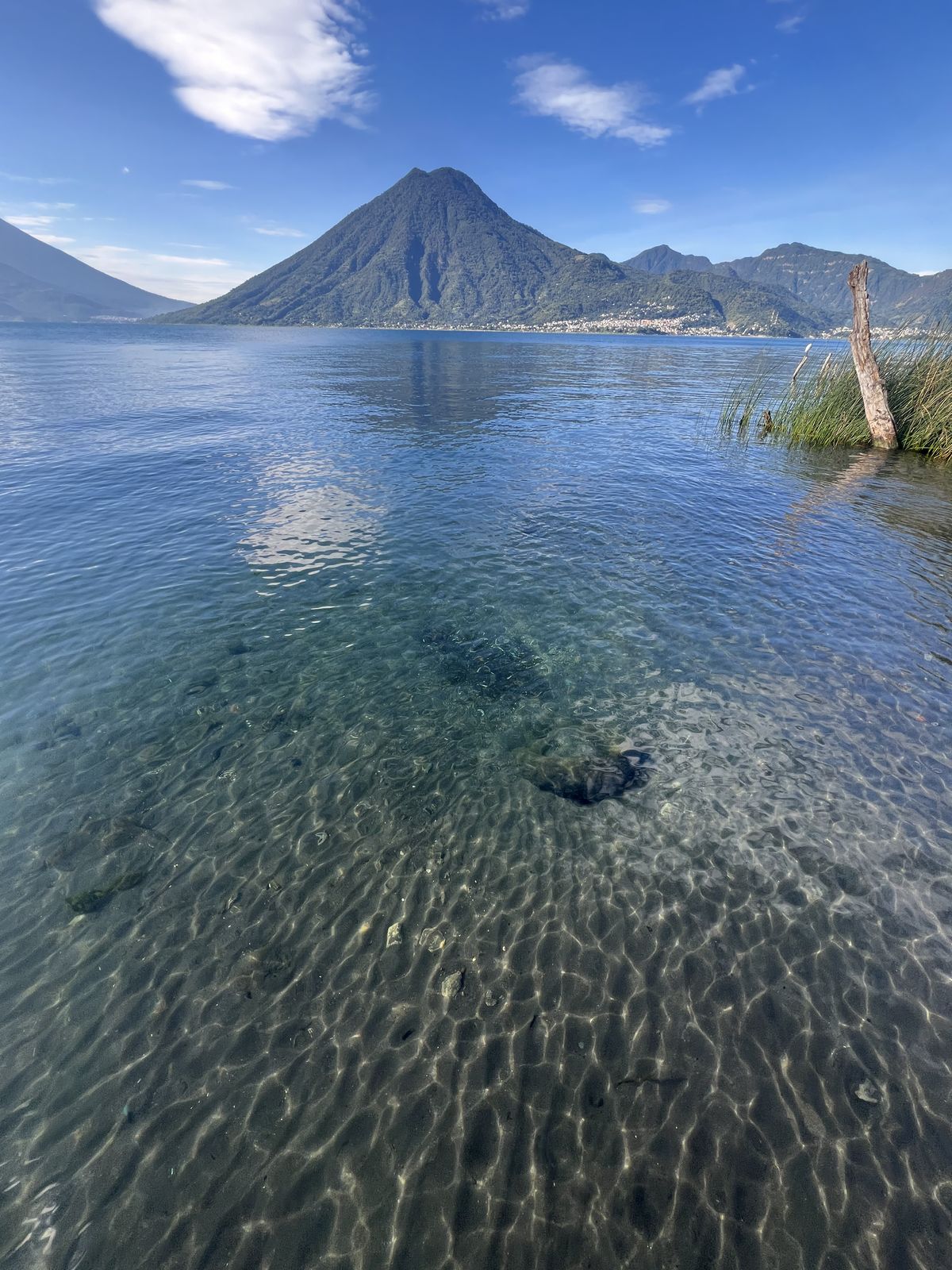
Lake Atitlán and San Marcos La Laguna, Day Four